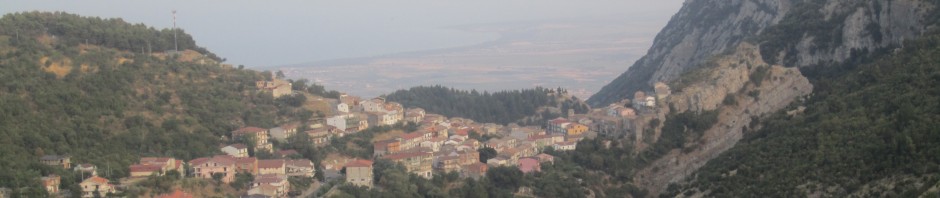
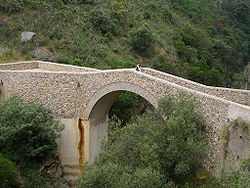
The village people are among the historical Albanian communities in Italy. Civita is called the Devil’s Bridge village; its landscapes are defined among the finest in Calabria.
In Civita, old Albanian is still spoken fluently , because the inhabitants belong to Albanian ethnic and language minority in Italy, recognized and protected by the Italian state.
The oriental style is mostly evident in the churches: the Arbëresh celebrate the Byzantine liturgical functions in Greek and retain the evocative symbolism with ancient Eastern Christian gestures and songs in Greek and in Albanian, together with Orthodox vestments, sacred icons, mosaics and the iconostasis.
In the old part you cannot avoid to notice several different chimneys,from the simplest to the most ‘artistic’ depending on the social status of the Albanian families. You can admire the Church with its precious Byzantine mosaics and the iconostasis, the sixteenth century chapels of Consolation and St. Anthony . The Ethnic Arbëresh Museum, in the center of the village, is very interesting.
Civita is a tourist centre known for its natural beauty, the Devil’s Bridge, ‘ Gole del Raganello’, ‘ Timpa del Demanio’, and the Pollino National Park . The Mountains are superb and suggestive. The Raganello canyon is absolutely fascinating.
Civita gastronomy is original and with strong character, as it has traditional Albanian dishes influenced by the vibrant Calabria cuisine.
 mycerchiara